
DNA
Throughout history, people and cultures have travelled across the world, settling in distant lands and weaving a timeless story of migration, conflict and coexistence. This story is written in our DNA — the hereditary material that connects us to our ancestors. DNA knows no language, religion or borders. It carries an indelible trace of where we come from, and forms one of the keys to who we are.
Of course, we feel a bond with the place and culture in which we grew up. Those surroundings shape us and define much of our identity. Yet, in another sense, our DNA makes us citizens of the world.
The same can be said of music. Like people, music has journeyed across the globe for centuries. Themes and rhythms have travelled and transformed, appearing in different countries — even on distant continents. Borders fade; they are far less fixed than we sometimes imagine.
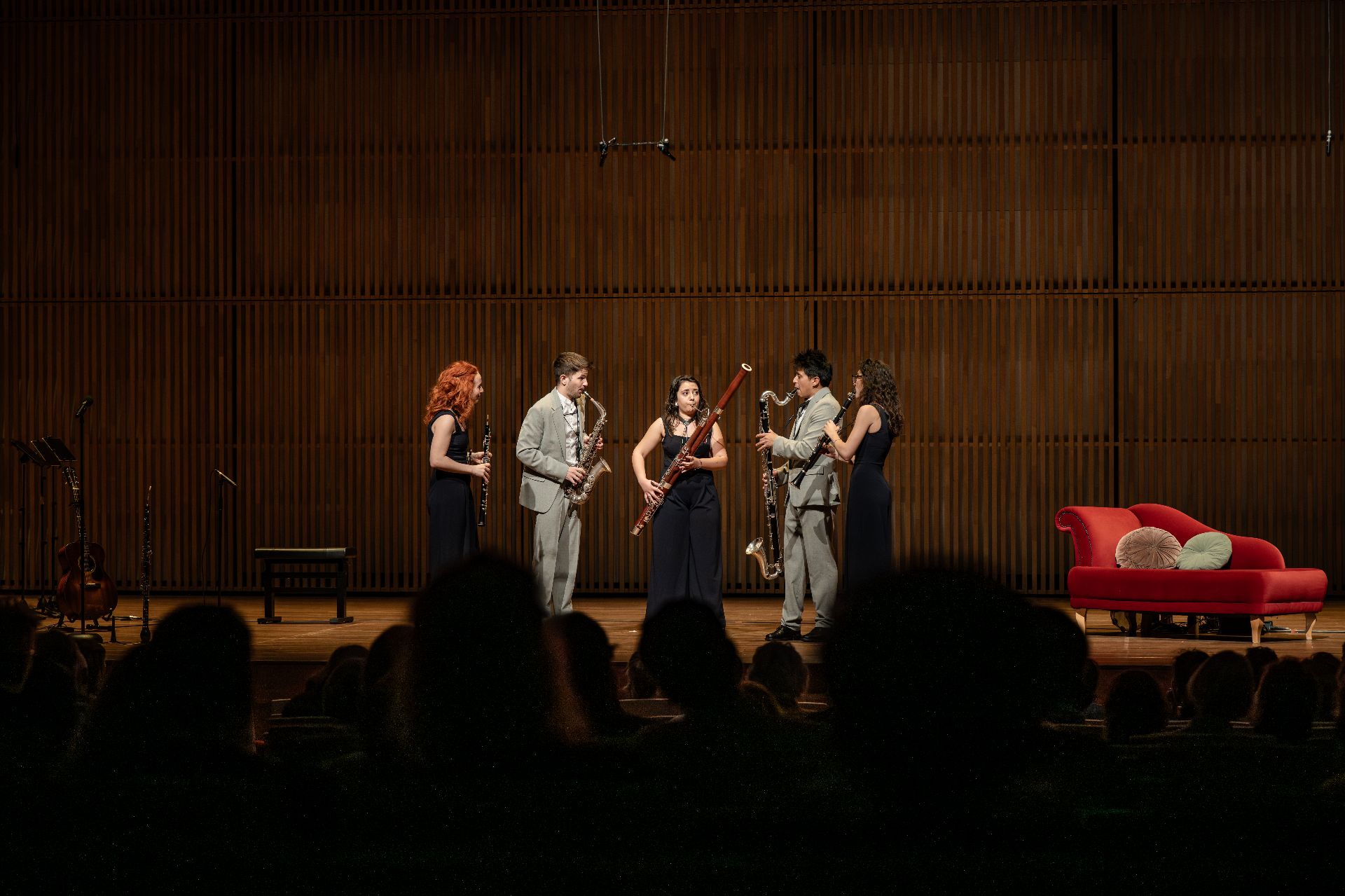
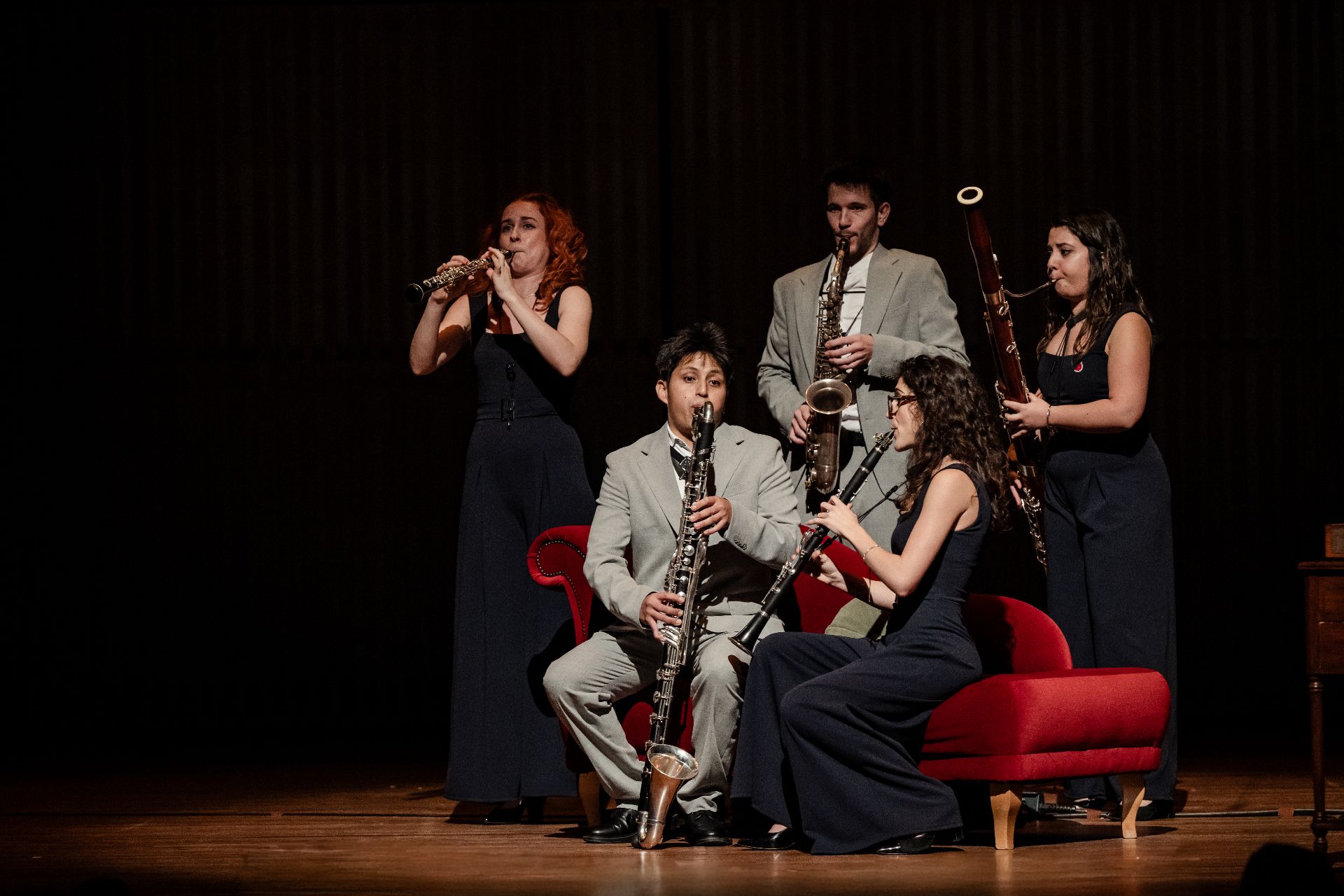
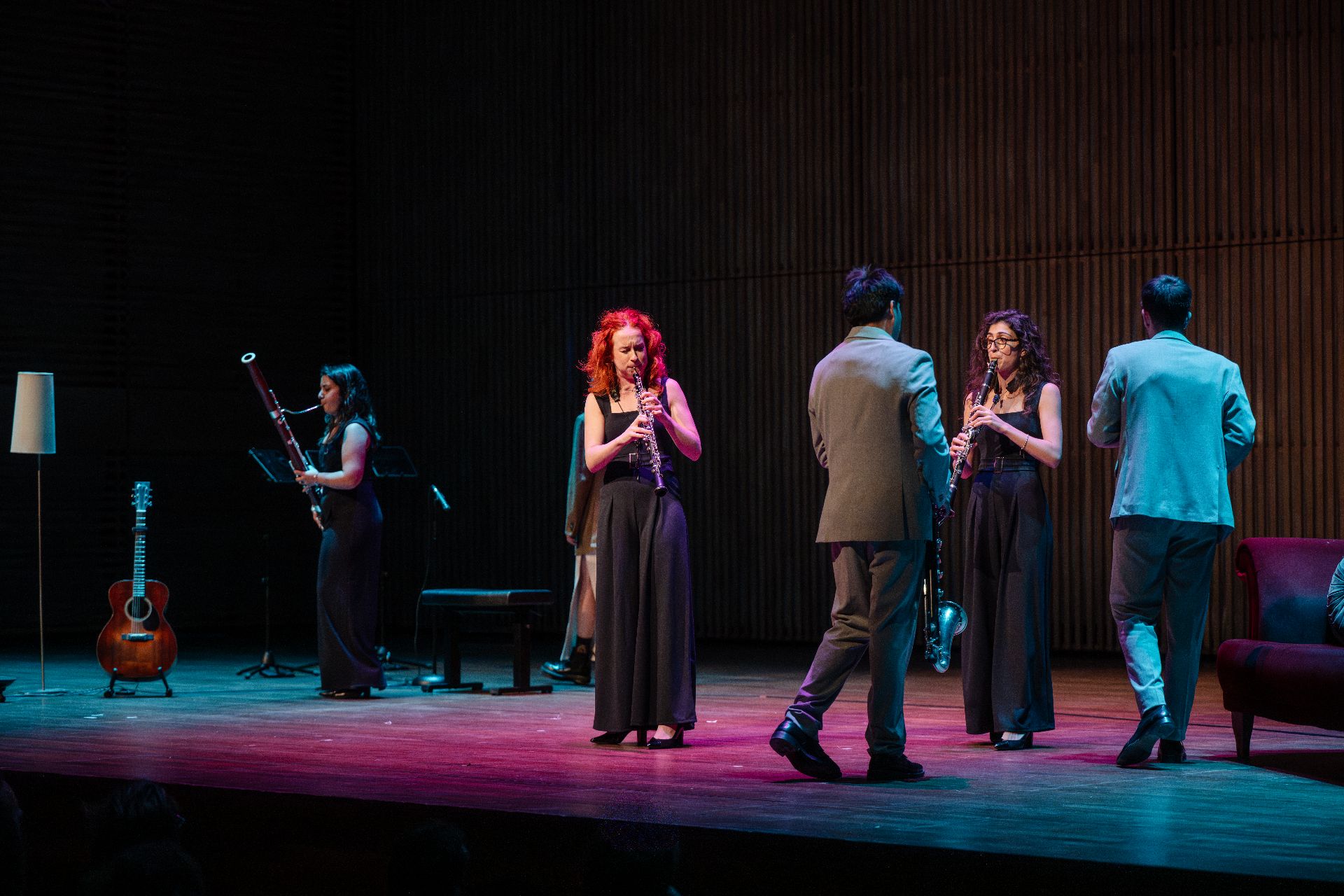
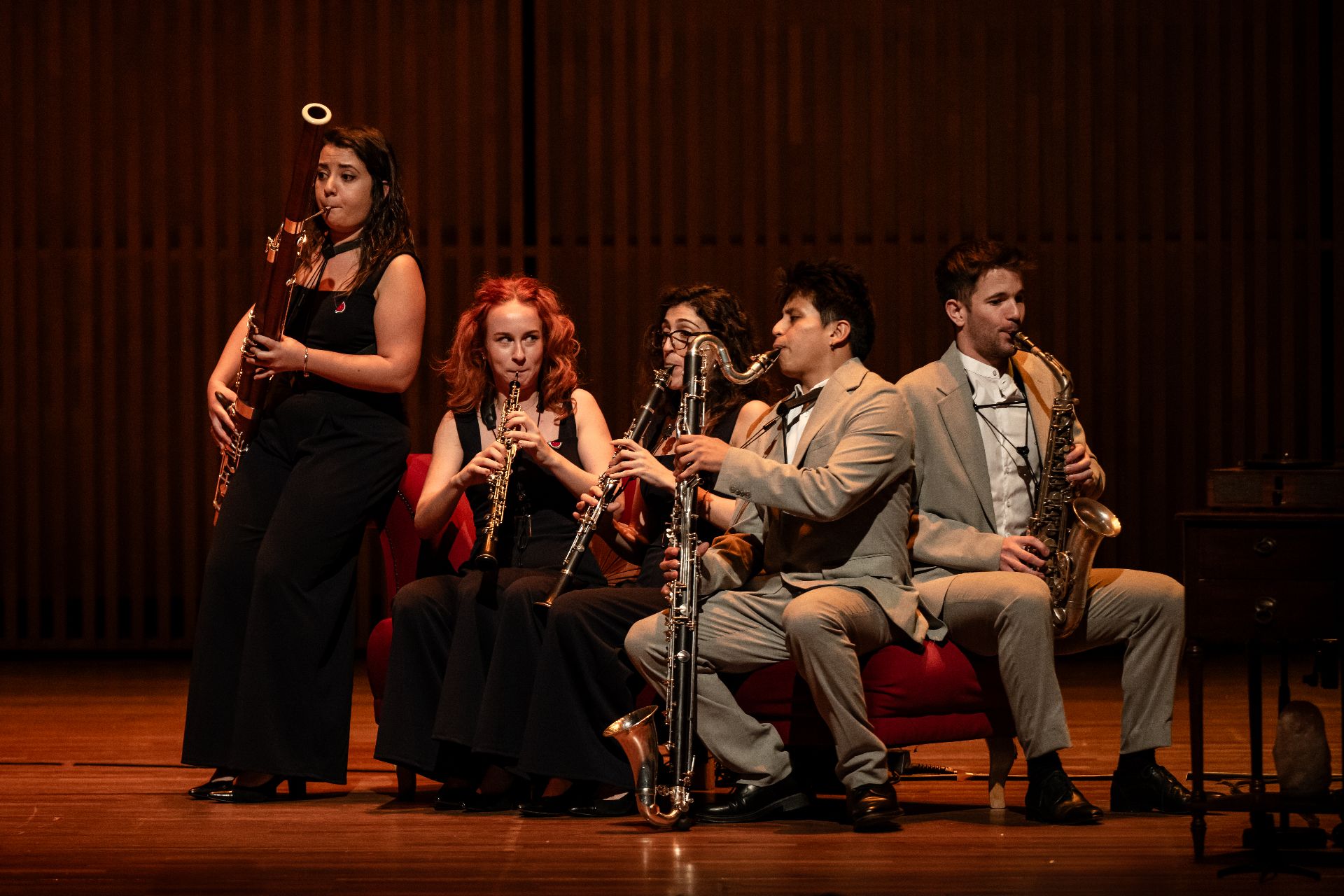
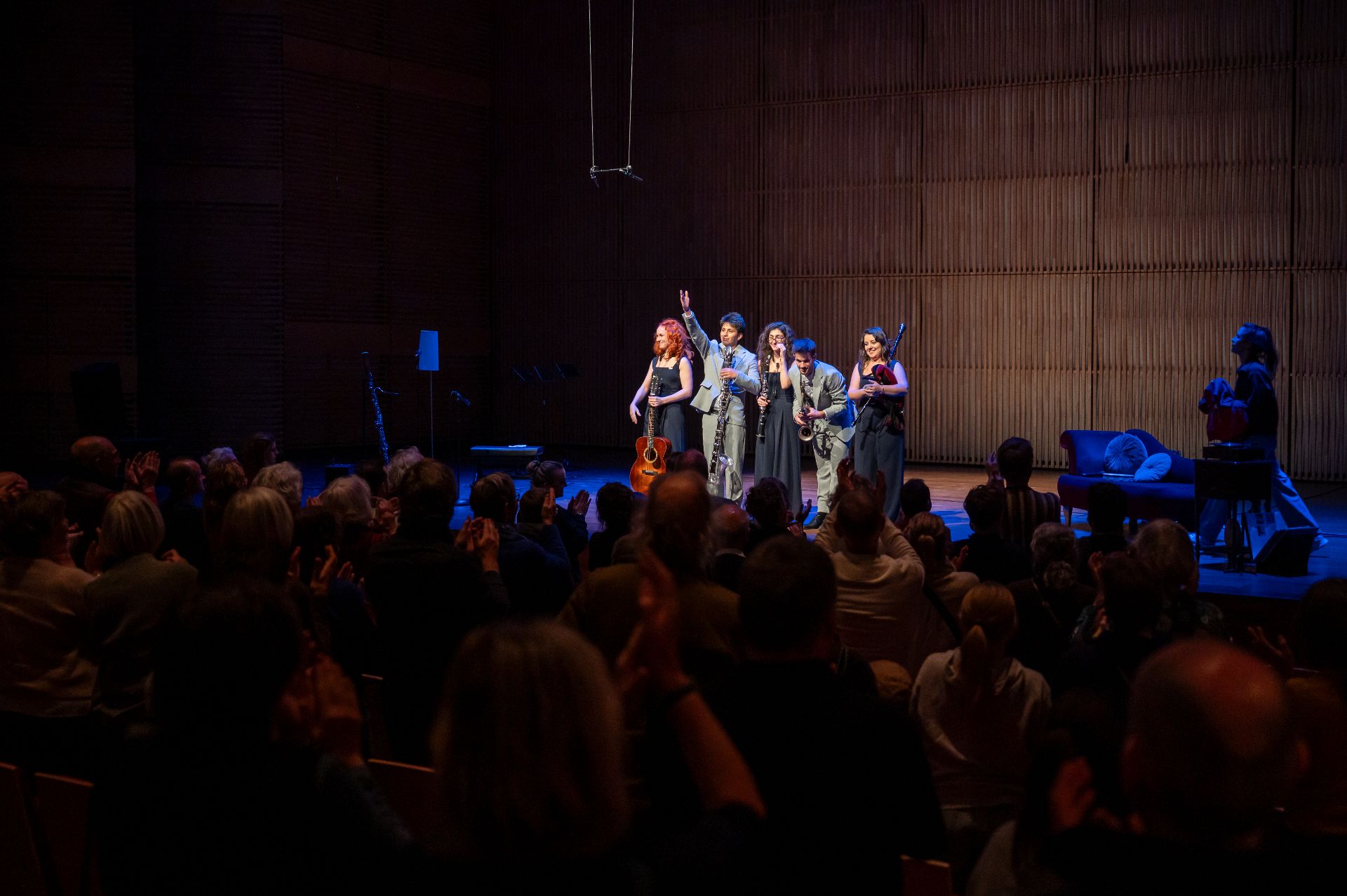
For this project, the five musicians of Dianto Reed Quintet took part in DNA testing to explore their origins and discover which (new) families they belong to. The results were full of surprises: the predominantly Spanish quintet (with one member from South America) turned out to have roots stretching from Greece to Scandinavia and from Mexico to the Balkans.
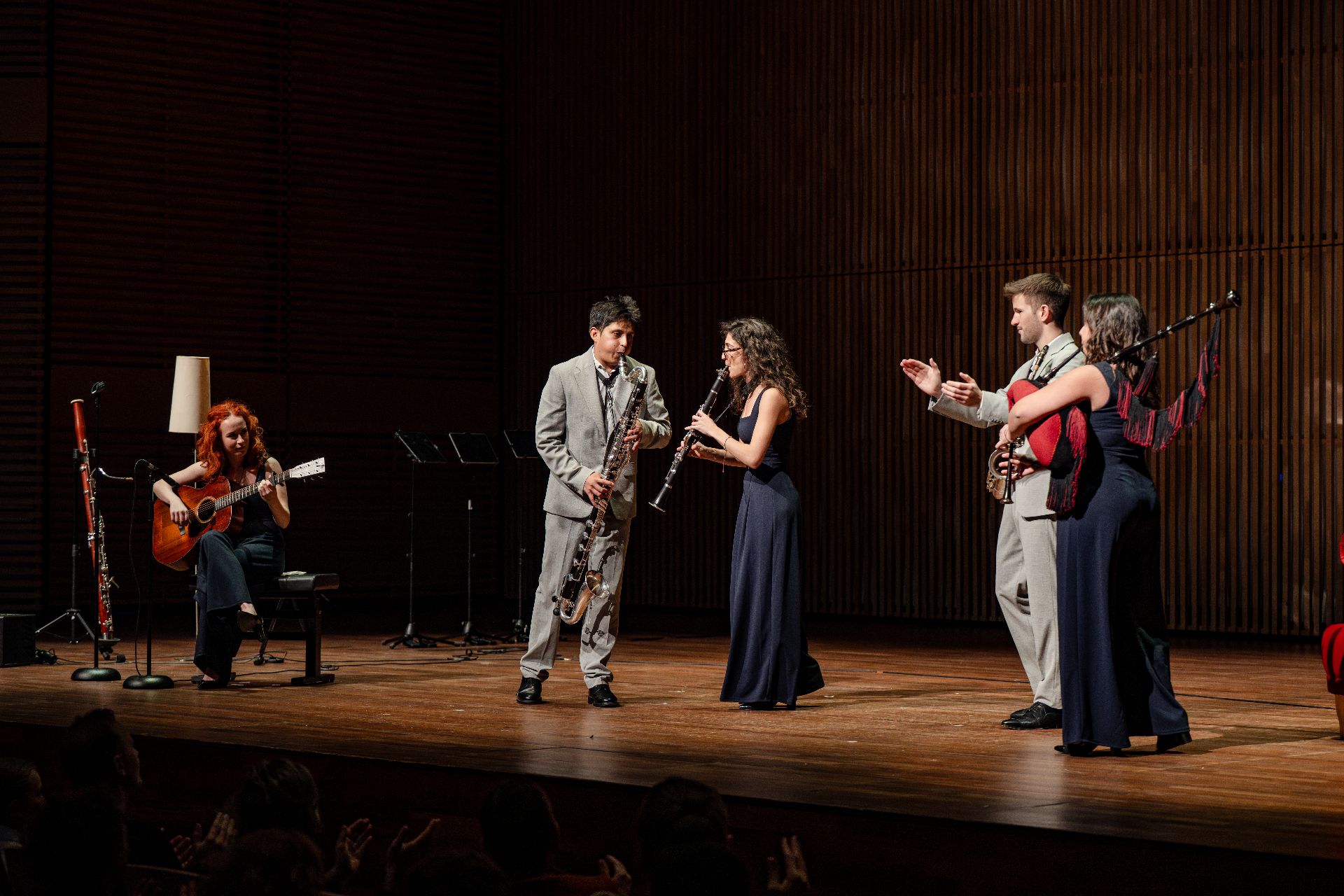
The programme combines newly commissioned works — by Ramin Amin (Iran) and Fuensanta Méndez (Mexico) — with traditional, classical and folk music. The sound world expands with the gaita, the Galician bagpipe, played by our bassoonist María, who also lends her voice in song.
Alongside the music, audiences will hear pre-recorded testimonies from contemporary migrants, including the two commissioned composers. These voices reflect on the many reasons people move: hunger, war, love, ideology, sexuality, study, work, and more. Migration always carries mixed emotions — a sense of loss and longing, but also of hope and renewal. We see it as an opportunity for growth and enrichment.
It is the migrations of our ancestors that make us who we are.
This performance offers a musical portrait of the rich diversity within the group’s DNA — and within each of its musicians — while standing as a heartfelt tribute to global citizenship.
Team
Dianto Reed Quintet:
María González Bullón – oboe, English horn, guitar
Ovidi Martí Garasa – saxophone
María Losada Burgo – bassoon. voice, bagpipe
Erick Steven Rojas Toapanta – bass clarinet
María Luisa Olmos Ros – clarinet
Scenography – Dianto Reed Quintet
Theater final director (Eindregie) – Wieger Meulenbroek
Light technician – Wout Jansen
Voiceover (by order of appearance)
Ella Tempel – Marina Díaz González (Spanish version)
Erick Steven Rojas Toapanta
Ghaeth Almaghoot – María González (Spanish version)
Fuensanta Méndez
Program
Jean Sibelius (1865-1957). Finlandia, Op.26. Arr. Max Knigge.
Helen Hopekirk (1856-1945). Romance in A minor. Arr. Raaf Hekkema.
Ramin Amin Tafreshi (1992). Echoes of the Buried Lullaby (2025)*
Tradicional. Freilich. Arr. Max Knigge.
Antonio Vivaldi (1678-1741). Concerto “La Notte”. Arr. Hugo Bouma.
– Allegro
Manuel de Falla (1876-1946). El sombrero de tres picos: Suite nr. 2 (1919). Arr. Arjan Linker.
– La danza de la Molinera
Rodolfo Halffter (1900-1987). 8 Tientos. Arr. Michele Mazzini.
– V
– VII
Lili Boulanger (1893-1918). Nocturne. Arr. Annemarie Hensens.
Fuensanta Méndez (1995). Las Patronas (2025)*
– La Bestia
– Los Viajeros
– Las Patronas
Nikos Skalkottas (1904-1949). 4 Greek Dances. Arr Dimitris Andrikopoulos.
– Peloponnisiakos
– Kleftikos
Avelino Cachafeiro (1899-1972). Muiñeira de Chantada. Arr. Max Knigge.
*World Premiere
Las Patronas – Fuensanta Méndez
The Mexican composer Fuensanta Méndez has dedicated this composition to Las Patronas, an independent group of women in Veracruz who, for the past thirty years, have devoted themselves to supporting the lives of migrants attempting to cross Mexico aboard La Bestia. Every day, they have exactly fifteen minutes to throw bags containing food and information to those on the train — a train on which around 400,000 people each year try to flee South and Central America in the hope of reaching the United States. La Bestia is a freight train also known as the Train of Death or the Train of the Unknown. The passengers are travelling on the roof because they cannot afford to pay human smugglers or the migration authorities, risking their lives on every journey.
“Once, I met someone in my city who seemed lost. He spoke Quechua and was searching for his younger sister, who had been abducted aboard La Bestia. I do not want them to remain ‘unknown’.
This is the first time I have written for reed quintet, and I regard it as one of the most inspiring commissions I have received so far.”
Voy a llegar a la frontera y cuando esté en la frontera te voy a llamar
ahí oras por mí suficiente
confórmate por lo mientras que hoy voy a salir.
Eso es lo más importante que puedas tener
que la comida no te vaya a fallar y ahí te acordarás
ahora que voy a comer la comida siempre me deseo comer con ellos
confórmate por lo mientras que hoy voy a salir.
No te preocupes vamos a cambiar de toda esta situación que estamos pasando.
Llegué a Palenque reventados los pieses casi echado sangre los zapatos.
No me arrepiento de haber venido porque lo hice como una decisión
lo que duele es lo que me hicieron a mí y aún tengo el valor.
Usted no se imagina, si no me hice loca es porque Dios es grande.
Tú les dices que me viste y que yo estaba alegre
no les vayas a decir que me viste así triste
que voy derrotada.
¿Quién te dijo que quiero cambiar el mundo?
Quiero cambiar yo.
No voy a cambiar el mundo,
voy a cambiar yo.
Echoes of the Buried Lullaby – Ramin Amin Tafreshi
The Iranian composer Ramin Amin Tafreshi, who resides in the Netherlands, explores the complexity of migration through a distinctly narrative approach. His new work sheds light on the harsh reality faced by Kurdish border labourers (Kolbars) in the western frontier regions of Iran. By reflecting the experiences of migrants through the extreme living conditions endured by people in these areas, he addresses themes such as displacement, resilience, social exclusion, and a profound sense of not belonging.
With this new piece, Amin Tafreshi creates an intercultural composition that intertwines traditional Kurdish lullabies with his own, Western-oriented musical language.
Voice Overs
He always said the mountains were our only friends, that they watched over us when no one else would, and they held our home cradled in their heart.
Each morning at dawn, he climbed into the silence of the mountains, crossed the valley of death into the far lands of the unknown, carrying our small bright hopes on his back.
The weight of our hopes bent his back, the harsh wind cracked his skin, the rough stones tore at his hands, the steep path bruised his feet.
One day, the mountains bloomed in red, and the sky wept, and the silence of the mountains broke with echoes of his buried lullaby.
My full name is Erick Steven Rojas Toapanta.
Rojas is a Spanish last name and Toapanta is an indigenous last name from the south of Ecuador.
I want to tell you a little bit about me:
When I was five, I saw a plane for the first time. My parents were inside, leaving the country. I didn’t understand why they left me behind. But I was too little to know.
One year later, when I was six, I crossed the cean to Spain to join them. It was my first time on a plane. It was incredible.
At the airport, in Valencia, my parents were waitinh with a lawyer in case the inmigration officers sent me back to Ecuador.
I have always lived between two cultures, Spanish and Ecuadorian. It is one of the most beautiful things I have in my life.
I can connect with two different worlds very similar at the same time. They both shape who I am and I feel very very lucky.
My parents always remind me where I come from and not to forget my roots.
Now, I understand why they left me behind when I was five. They were looking for a better future for me.
My story exists because of my parents. They are the real inmigrants. I’m just a result of their migration. A small echo of their courage.
Movement is part of the very fabric of life in this universe. It’s written in our nature.
Just as birds cross oceans and deserts, humans too have always moved in search of safety, dignity, and possibility. Migration is not the exception. It is a rhythm as old as existence.
The only unnatural thing about immigration is the politics wrapped around it. Again and again, and across continents and eras, politicians have pointed their fingers at immigrants to mask their own failures. But the truth is clear.
Every nation that thrives does so because of those who arrive with new hands, dreams, and perspectives. The places we love, the foods we eat, the cultures we celebrate, almost everything is built from journeys. The anger directed at immigration is not about immigrants.
It is a destruction, an attempt to turn attention away from corruption, inequality, and failed governance. It is easier to build a world than to build a just society.
To immigrate is to hope, and hope is the most human thing of all.
Dear Erik, María, María, Ovidi and Malu,
I present to you Patronas with all of my love. Dedicatee¡d to the Central American inmigrants.
It carries the name of Las Patronas de Matlan de los Reyes, independent group of women who have devotedly dedicated the past 30 years to taking care of the lives of the travelers crossing nearby their hometown, not far from where I grew up.
The travelers go on board of La Bestia, also known as the Train of Death and the Train of the Unknown, but they have a name and they have a story, and they shall not be unknown.
I tried as much as I could to embroider their words in the most beautiful flowers I was able to.
As Norma Romero would say: “who told you I wanted to change the world?”
“I want to change me”
Photos: Maarten Mooijman


